For clinicians
and researchers
Records your patients bring, ready for the chart.
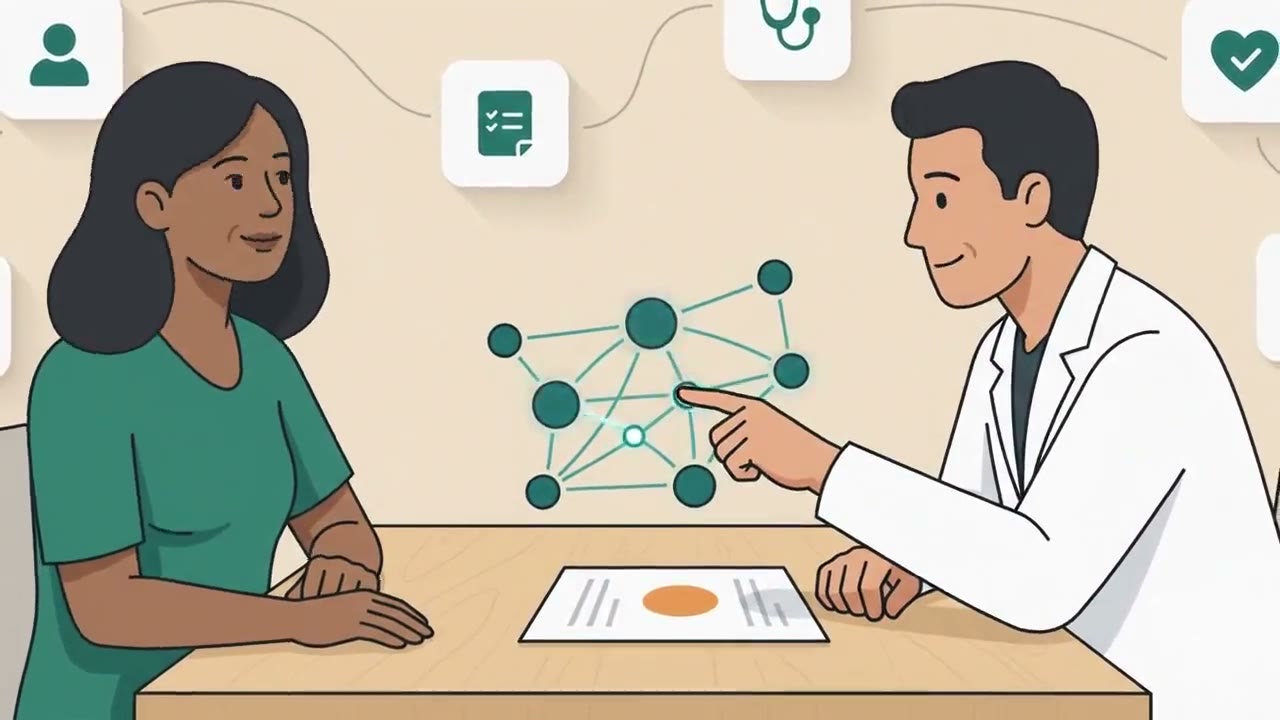
Your patient brings one report in clinical language, with standard codes, that you can read in minutes and attach to their chart. If your system takes FHIR, it can import the same records directly.
§ 1
What you receive
A report you can read in minutes.
Written for a visit
A PDF in clinical language, with the standard code beside each finding and the source of each fact. POTS Check makes one today.
The codes as the source sent them
ICD-10 and SNOMED CT for diagnoses, LOINC for labs, RxNorm for medications. Never re-coded by guesswork.
§ 2
Getting it into the chart
Filed like any outside record.
- Front desk and medical records
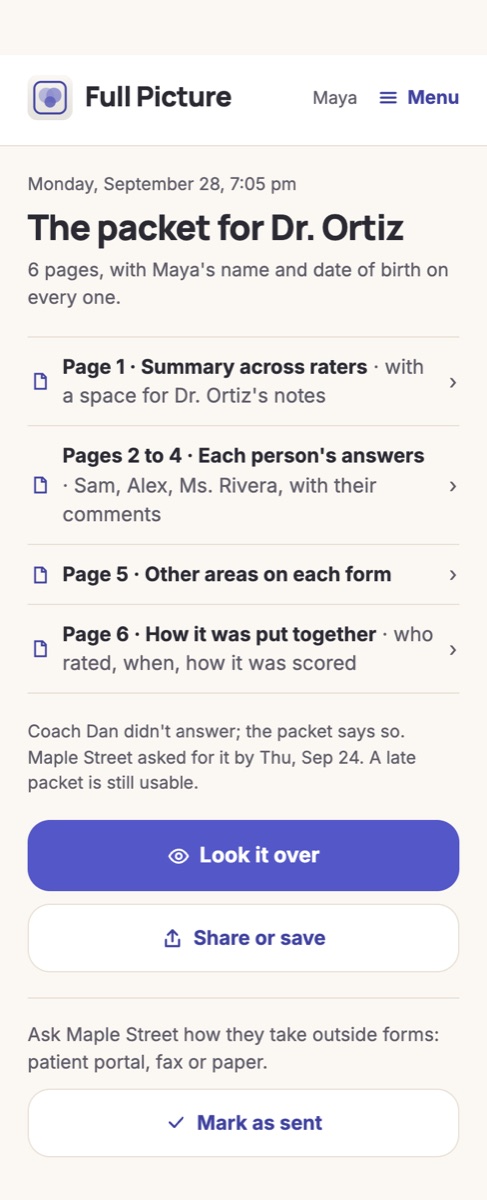
- The report is a PDF, so it is filed the way your practice already takes outside records: through the patient portal, by fax, or scanned at check-in. Full Picture sends its packet the way the practice asks for it.
- IT and informatics
- The same records export as FHIR R4, which most record systems can import, and an International Patient Summary export is being built. Nothing connects to your system unless you set it up.
- A format we don’t read yet
- Each source format is read by an adapter, and adapters are open source. Your team, or ours, can build one for the format your system sends and contribute it to the project. How adapters work →
§ 3
Why you can trust it
Know what to trust, at a glance.
A source on every fact
Clinician, device, patient or AI, labeled on each record.
Patient-reported, and labeled so
Observation forms, symptoms and notes arrive marked as the patient's or family's own.
Nothing quietly merged
Two records of the same thing stay two records, linked, so you can see both.
§ 4
In practice
Reports patients already bring.
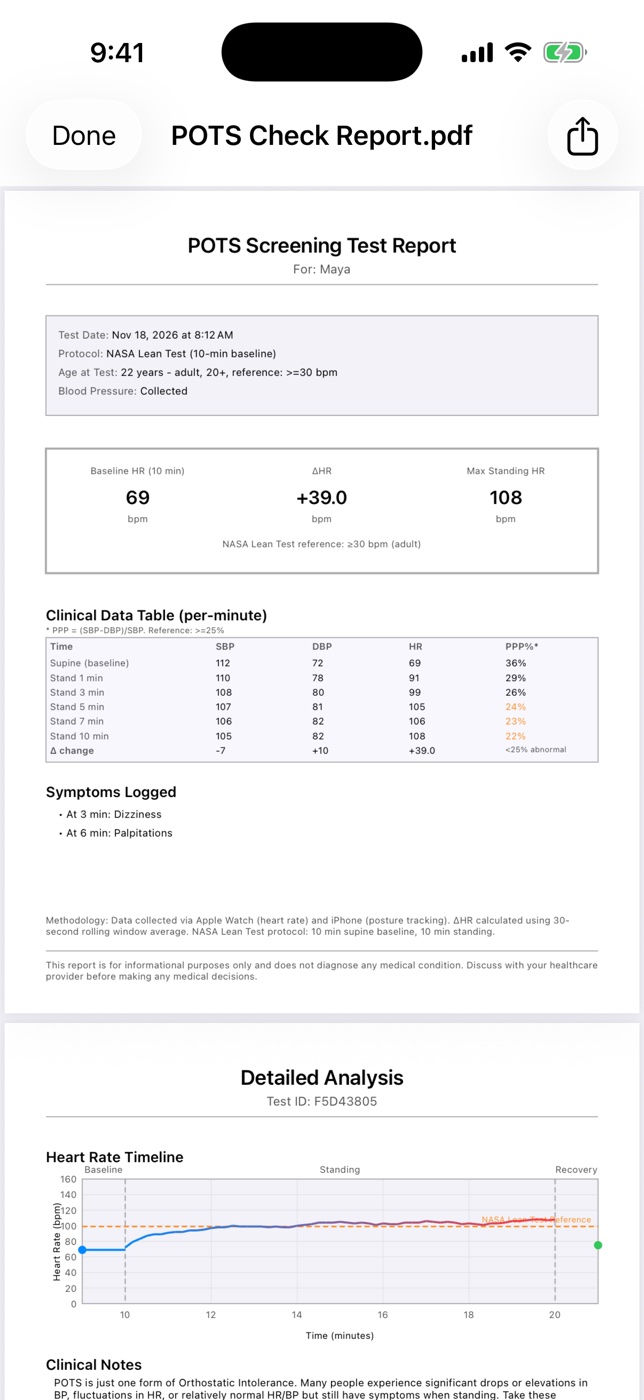
POTS Check
On the App Store. A standing test at home with an Apple Watch, exported as a report of every test: heart rate change, blood pressure and symptoms, ready to bring to a visit.
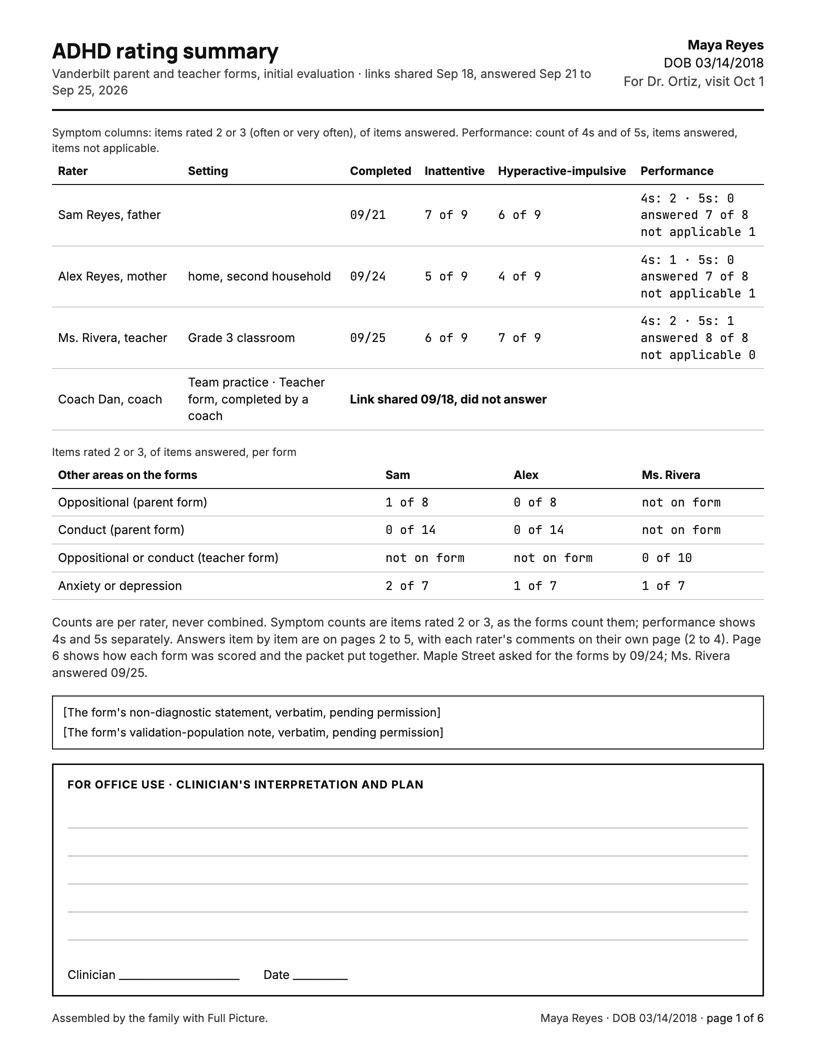
Page 1 of 6, made-up family.
Full Picture
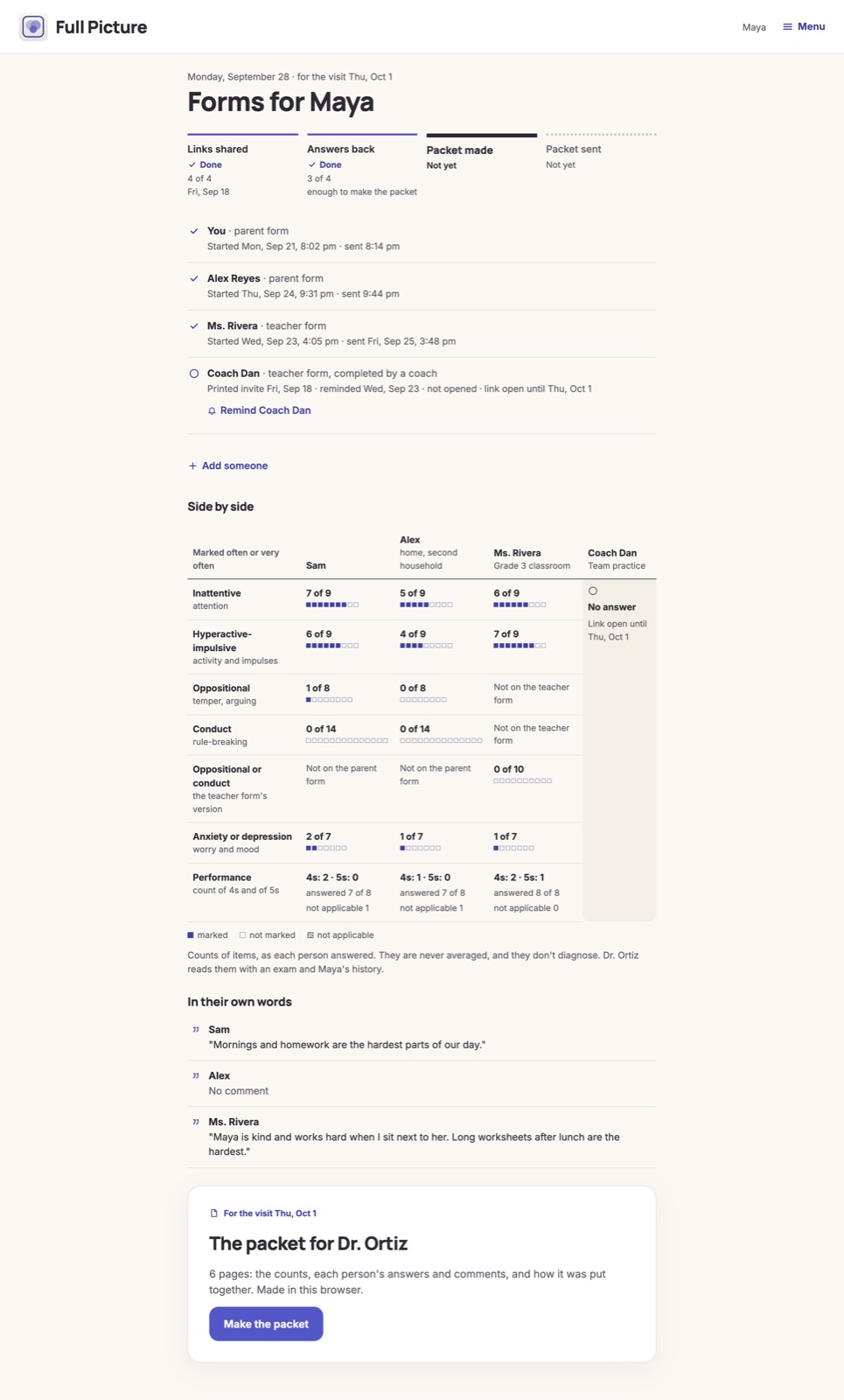
Live, in early testing at fullpicture.family. Parents and teachers fill in ADHD rating forms online, and the family sends one packet: a summary across raters, each rater’s answers, and how every form was scored. Counts stay per rater, never combined, with room for your interpretation. Its answers are moving onto Cascade Protocol records now.
§ 5
For researchers
Records people choose to share, from everywhere they get care.
A pod holds one person’s whole record: every hospital and clinic, their devices, and what they and their family report, each fact coded and tied to its source. No single health system has that picture, and the person decides who sees it.
Only the parts a study needs
The person shares the parts a study asks for, such as medications and lab results, and nothing else. They can stop sharing at any time. Partial sharing is being designed in the open.
Ready to pool
Every pod uses the same vocabulary and the standard codes, so records from many people can be combined and queried in SPARQL without mapping each hospital’s export.
A source on every fact
Tell a clinician’s diagnosis from a parent’s rating or a watch’s reading, and trace each one back to the document it came from.
Measures from daily life
Standing tests from POTS Check and rating forms from home and school sit beside the clinical record, dated and attributed.
Today, research means working with people who choose to share their pod with you. Consent and partial sharing are being built in the open, and we want research partners to help shape them.
§ 6
Talk with us
Help shape what clinicians receive.
We want clinical advisers and research partners while the protocol is still early.